
In a pioneering career spanning more than 50 years, Dr. Barbara Ross-Lee has been a steadfast advocate for the role of Osteopathic Medicine in improving the public’s health in the United States.
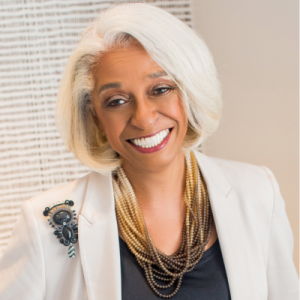
After earning her Osteopathic medical degree, she practiced Family Medicine in Detroit, served as a physician in the U.S. Navy Reserves, and joined the faculty of Michigan State University College of Osteopathic Medicine. Her work at the intersection of clinical care, education, and public health – including service as a consultant to the U.S. Department of Health and Human Services – led to her selection as a Robert Wood Johnson Health Policy Fellow in 1990.
In 1993, Dr. Ross-Lee became the first Black woman dean of a medical school in the United States. She has since served as president and dean of multiple Colleges of Osteopathic Medicine, earning national recognition for her leadership in medical education, health equity, and population health.
Since joining the Board of the American Osteopathic Foundation (AOF) in 2019, Dr. Ross-Lee has served as its President, and notably, led the Foundation’s Project Future Initiative. The Initiative brings together diverse perspectives to define a shared vision for the future of the Osteopathic Profession and its leadership role within the health care ecosystem.
AOF: Why is the AOF’s Hope, Healing and Health (H3) Campaign so important to you?
Dr. Ross-Lee: Because it’s about the future leadership of our profession. It’s about building a foundation that allows us to pursue innovation that enhances the health of the American population. The AOF’s H3 Campaign supports the profession in a way that benefits not only Osteopathic Medicine, but the broader public. It raises our visibility, affirms our value, and validates who we are and what we bring to health care – both now and in the future.
AOF: What do you hope the Campaign will achieve?
Dr. Ross-Lee: As the profession has moved from being a minority presence in medicine to one that is growing rapidly, we now have a real opportunity to lead. Today, we have thousands more students than ever before, and support from the AOF is needed now more than ever. Through the H3 Campaign, we are investing in even more scholarships to train future physicians, and we are recognizing change agents throughout the profession at every stage of their careers. We know from experience that recognition builds pride and strengthens professional identity.
We are also funding grants for health centers that serve disadvantaged communities in the United States, supporting Osteopathic medical outreach globally, and providing critical seed funding for evidence-based research. Taken together, these investments elevate the profession and position us to reach what I call the “High Ground” of health care.
AOF: What does the High Ground mean to you?
Dr. Ross-Lee: The High Ground is about leadership – leadership in improving population health and shaping the future of medicine. When you look at population health outcomes in the United State, we lag behind many other developed nations. Osteopathic Medicine offers distinctive principles and practice that can help address these challenges. There is no better time for us to apply them, but to do so broadly and more intentionally.
AOF: How can we achieve the High Ground?
Dr. Ross-Lee: At its core, Osteopathic Medicine is grounded in health equity and a deeply human-centered philosophy of care. We are trained to use our hands to diagnose, to treat neuromuscular skeletal conditions, and to communicate empathy and connection. Today, we also have the tools and technology to document the impact of that hands-on approach and to demonstrate its value through evidence-based research. Showing the world those results is essential.
AOF: The AOF recently funded a pilot study that showed patients who received Osteopathic Manipulative Therapy (OMT) after receiving the COVID vaccine were less likely to contract the virus – and, if they did, experienced milder cases. Is that the kind of impact you’re describing? How does the H3 Campaign fit into that picture?
Dr. Ross-Lee: What’s significant about that pilot study is not only its findings but what those findings make possible. The researchers are now using that data to apply for funding for organizations like the NIH – something that would not have been possible without results from a small, randomized trial.
This illustrates a fundamental paradox in research: you need funding to get results, but you need results to secure funding. A critical role of the H3 Campaign is to help researchers bridge that gap. By funding early-stage research, we enable discoveries that allow Osteopathic Medicine to be seen, understood, and valued within the broader scientific community.
AOF: Why is the profession’s focus on health equity so important right now?
Dr. Ross-Lee: For decades, American health care has struggled with access, cost, and quality, compounded by institutional behaviors that perpetuate inequities. While there have been recent structural changes within health care, those fundamental challenges remain.
If we are going to address them meaningfully, physicians and other health professionals must have a voice in shaping what comes next. Raising the profile of Osteopathic Medicine enables us to be part of those conversations and apply our expertise toward solving problems that have persisted for generations.
AOF: Beyond supporting the Campaign, what can people do to help promote the profession and contribute to those positive changes?
Dr. Ross-Lee: Get involved. Nominate colleagues for awards. Apply for scholarships or grants. Volunteer as a reviewer. Considering serving on a foundation board – particularly this Foundation’s board. The AOF offers a unique opportunity to help shape a long-term vision for the profession. It brings together diverse perspectives and focuses on academic and policy leadership, and advocacy, as well as foresight and stewardship. This is the distinctive role the American Osteopathic Foundation plays – and no other Osteopathic organization is poised to do it in quite the same way.